Tackle Steep backyards: Sloping Solutions
Do you find yourself staring at your backyard, admiring the view, and suddenly noticing that the ground seems to tilt ever so slightly? You're not alone. Many homeowners discover that their backyard has a slope, and it can be a challenge to maintain and utilize the space effectively. But fear not! With the right strategies and solutions, you can transform your sloping backyard into a beautiful, functional, and safe oasis.
First, it's essential to assess the severity of the slope in your backyard. A gentle slope might add character and provide drainage, while a steep one could pose hazards and limit your landscaping options. On average, a slope of 15-20 degrees is considered steep, and one exceeding 30 degrees is extremely steep. Armed with this knowledge, you can plan and implement strategies that work best for your unique terrain.
Understanding the Impact of a Sloping Backyard
Before you dive into transforming your sloping backyard, it's crucial to understand the implications of a sloped surface. Slopes can affect drainage, make it challenging to mow the lawn, and even pose safety hazards. They can also create opportunities for unique landscaping features and designs that would not be possible on flat land.


For instance, a slope can direct water flow towards certain areas, potentially leading to erosion or flooding during heavy rainfall. This can be mitigated through proper grading, drainage systems, and the strategic placement of plants and barriers. Additionally, mowing a sloped lawn can be hazardous and time-consuming, making it important to consider alternative ground covers or low-maintenance landscaping techniques.
Grading and Drainage Solutions for Sloping Backyards
Grading is a essential process that involves leveling or shaping the terrain of your backyard. If your slope is mild to moderate, you might be able to create gentle curves and contours to evenly distribute water and promote healthy plant growth. In contrast, severely sloped backyards may require more advanced grading techniques or even retaining walls to control water flow and prevent erosion.


To address drainage issues, consider implementing a French drain or installing gravel paths and swales – shallow depressions designed to capture and redirect water. While these solutions may require professional help, they can significantly improve the functionality and safety of your sloping backyard. Moreover, incorporating plants with strong root systems and diverting water away from your home's foundation can help prevent costly structural damages.
Easy Grass Alternatives and Low-Maintenance Landscaping
If the slope in your backyard makes traditional lawn care a challenge, consider alternative ground covers that require minimal effort to maintain. These can include mulch, stone, or even native plants that thrive in your local climate. By choosing low-maintenance landscaping options, you can reduce the time and energy spent on upkeep while still creating a visually appealing outdoor space.
Moss, clover, and wildflowers are excellent alternatives to traditional grass that can thrive in shady, sloped areas. Theseimidlawn-keywordslow-growninground-coverscan also help to prevent erosion by binding the soil and creating a lush, resilient surface. Additionally, you can incorporate hardscaping elements like patios, decks, or retaining walls to create flat, usable areas that can be easily maintained and enjoyed.


Capitalizing on the Unique Aesthetic of a Sloping Backyard
Now that you've addressed the practical considerations of a sloping backyard, it's time to embrace the aesthetic opportunities it presents. Slopes can add dimension and character to your outdoor space, making it an ideal canvas for creative landscaping designs.
Terracing is a popular technique for transforming sloped backyards into a series of flat, easily navigable spaces. By building retaining walls or using boulders and plants to create retaining structures, you can divide your yard into distinct sections, each suited to different activities or plant types. This approach can help to maximize the functionality of your backyard and create a sleek, modern look.
Staircase Designs for Sloping Backyards
If the slope in your backyard is significant, consider incorporating stairs or paths to make the space more accessible. Staircases can be designed to harmonize with your home's architecture and complement your landscaping choices. They can also be used to create additional living spaces, such as patios or seating areas, on different levels of your yard.


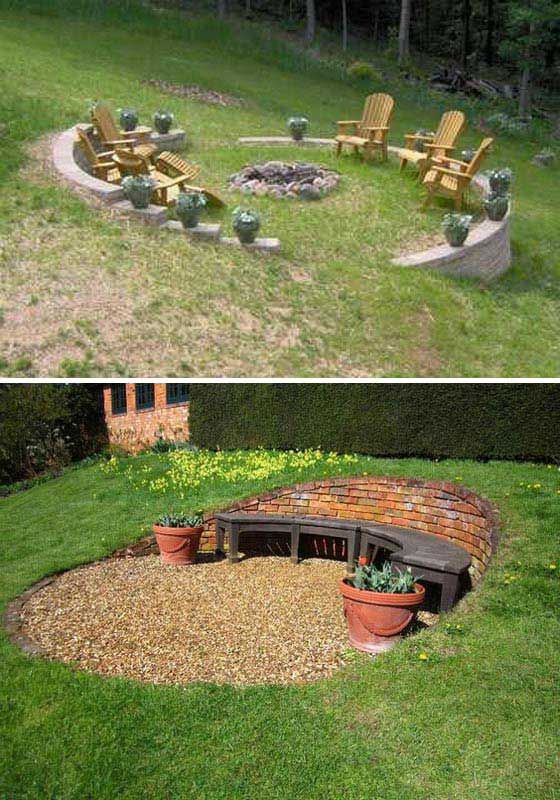


Materials like wood, stone, or composite can be used to create durable, attractive stairs that blend seamlessly with your backyard design. To enhance safety and aesthetics, consider incorporating built-in seating, planters, or lighting elements into your staircase design. Curved, meandering paths and steps can also add visual interest and soften the appearance of a sloping backyard.
Planting and Gardening on a Slope
A sloping backyard provides an ideal opportunity to experiment with planting techniques and incorporate a wider variety of plants into your landscaping. Steeper slopes can be stabilizing through the strategic placement of plants with strong root systems, which can help to prevent erosion and maintain the integrity of your backyard terrain.
When planting on a slope, keep in mind that steeper angles may require more frequent watering, as water can drain away faster than it would on flat ground. To accommodate this, consider incorporating drip irrigation systems or water-holding fabrics into your planting beds. Additionally, using native plants and those with attractive foliage and flowers can help to create visual interest and enhance the overall beauty of your sloping backyard.
In every backyard, there's potential for a beautiful and functional outdoor living space – even when it comes with a slope. By addressing the practical considerations of a sloping backyard and embracing the unique aesthetic opportunities it presents, you can transform a potential challenge into an asset that adds value and enjoyment to your home. So, don't let a little incline hold you back from creating the backyard of your dreams – tackle the slope, and watch your landscape flourish.
Related Articles

Transform Sloped Backyards: 10 Brilliant Ideas
Transforming a steep backyard slope into a functional and attractive space can seem daunting at first, but with the right ideas and strategies, you can turn it...

Steep Slope Backyard Ideas on a Budget
Transforming a steeply sloped backyard into a functional and beautiful space can often feel like a daunting task, especially on a budget. However, with some...

Transform Sloped Backyards: Innovative Ideas for Steep Terrain
Diagnosing a sloped backyard can present both challenges and opportunities. While it may limit some traditional landscaping options, the unique topography...
Maximize Your Space: Transforming Down Sloping Backyards
Transforming a down sloped backyard into a functional and aesthetically pleasing space can often feel like a daunting task. However, with the right strategies...
Transform Sloping Backyards: 17 Inspiring Landscape Design Ideas CRITICAL RULES CHECK: - Title text only, no quotation marks. - Begins with the first letter, no additional content.
Embracing a sloped backyard may initially seem challenging, but it presents a unique opportunity to create a visually stunning and functional landscape. With a...
Slope Garden Bed Ideas: Creative Solutions for Steep Terrains
Transforming a sloping garden into a functional and esthetically pleasing space can seem challenging, but with the right garden bed ideas, you can achieve a...